We are processing your request.
Please, don’t close or refresh the page.
Home Royal Ontario Museum What To See
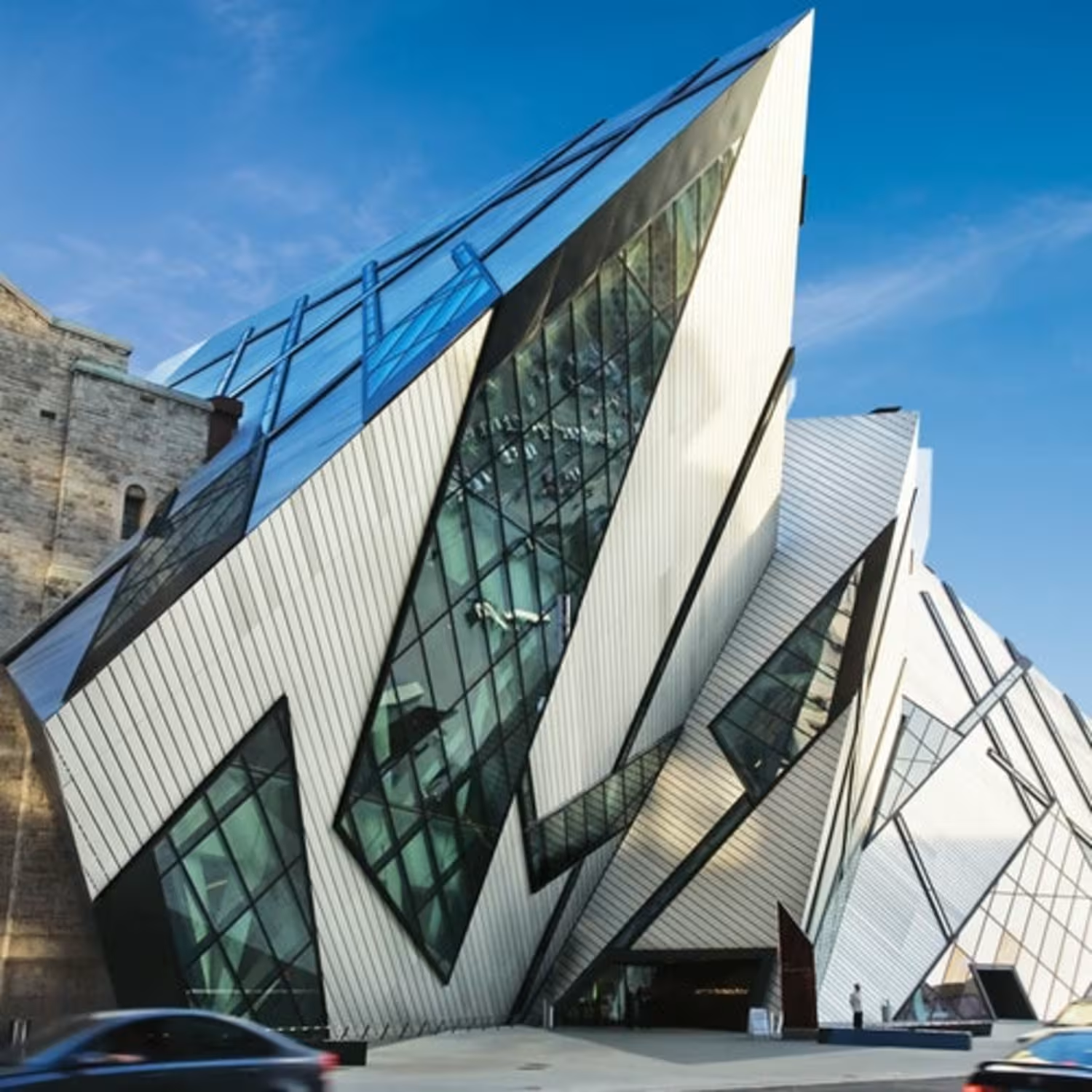
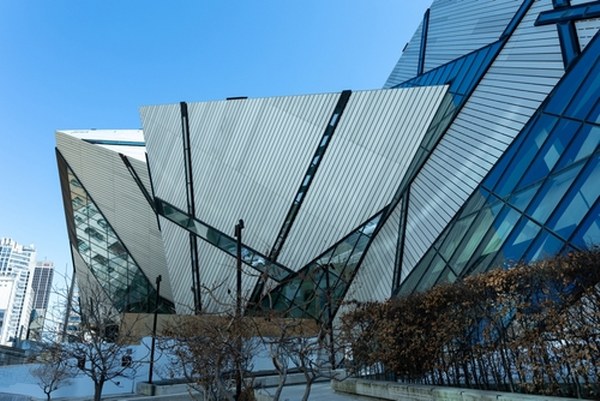
Royal Ontario Museum building on Queen's Park, Toronto

What to See at the ROM: Dinosaurs and Top Galleries

Gordo the Barosaurus, a T. rex, a walk-through bat cave and 4 billion years of fossils, plus mummies, minerals and Chinese architecture. Where each gallery is and how to plan your route through the Royal Ontario Museum.

Most people walk into the Royal Ontario Museum with one question: where are the dinosaurs? They are on Level 2, and they are only the start. The ROM holds more than 18 million objects across 40 gallery and exhibition spaces, so a visit without a plan turns into a lot of corridors. This guide takes you through the galleries worth your time, starting with the Age of Dinosaurs and the fossils that come before it, then the Bat Cave, the mammals and the mineral halls, and finally the world culture galleries upstairs and down. For tickets, see the Royal Ontario Museum ticket page; for transport and timings, our ROM visitor guide has the practical details.

Royal Ontario Museum: Skip The Line

Highlights

See dinosaur skeletons and track the rise of mammals after their extinction.

Explore galleries of meteorites, rocks, and precious minerals, and learn about mining’s impact on daily life.

Browse the largest collection of Chinese architectural artifacts outside of China.

Discover the world’s third-largest fashion and textile collection.
The ROM's galleries: key facts

The James and Louise Temerty Galleries of the Age of Dinosaurs are on Level 2 and were renovated in autumn 2025, adding more than 3,500 square feet.

Gordo, a Barosaurus 27 metres long, is the largest real fossil dinosaur skeleton mounted in Canada.

The Willner Madge Gallery, Dawn of Life covers almost 10,000 square feet and shows nearly 1,000 fossils, more than 60% of them from Canada.

The Bat Cave recreates the St. Clair Cave in Jamaica with more than 20 bat specimens and over 800 models.

The Teck Suite of Galleries: Earth's Treasures holds close to 3,000 minerals, gems, meteorites and rocks.

The Egypt gallery on Level 3 shows close to 2,000 of the museum's 25,000 Egyptian artifacts, from 4,000 BC to AD 400.

The ROM holds the largest collection of Chinese architectural artifacts outside of China.

The Age of Dinosaurs: what you will see
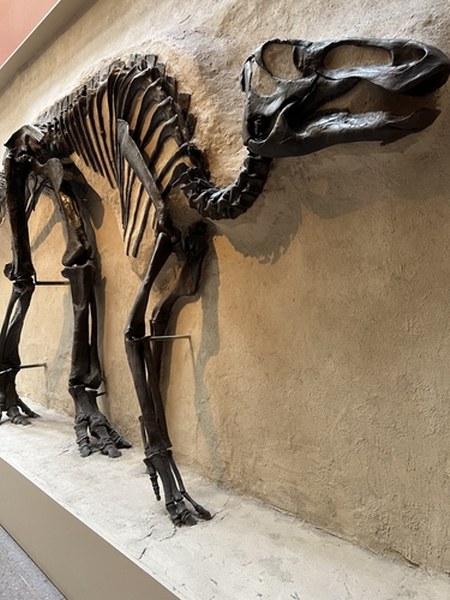
Fossil display at the Royal Ontario Museum

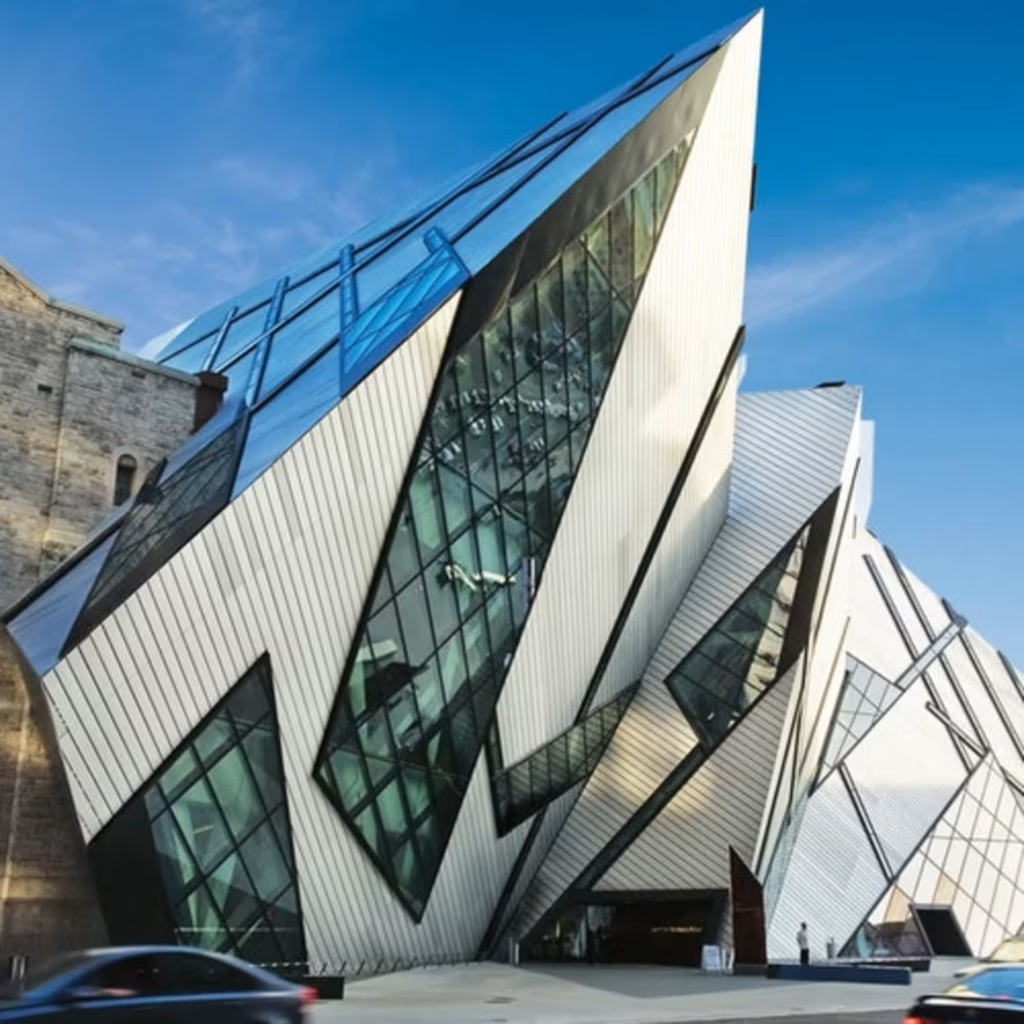
The James and Louise Temerty Galleries of the Age of Dinosaurs sit on Level 2 of the Michael Lee-Chin Crystal, the angular glass and aluminum wing of the museum. The galleries cover the Jurassic, from 200 to 145 million years ago, and the Cretaceous, from 145 to 65 million years ago, and are arranged around three themes: life on land, life in the sea and life in the air. The renovation completed in autumn 2025 opened up sightlines across the whole space and put more of the museum's best-known dinosaurs on permanent display.

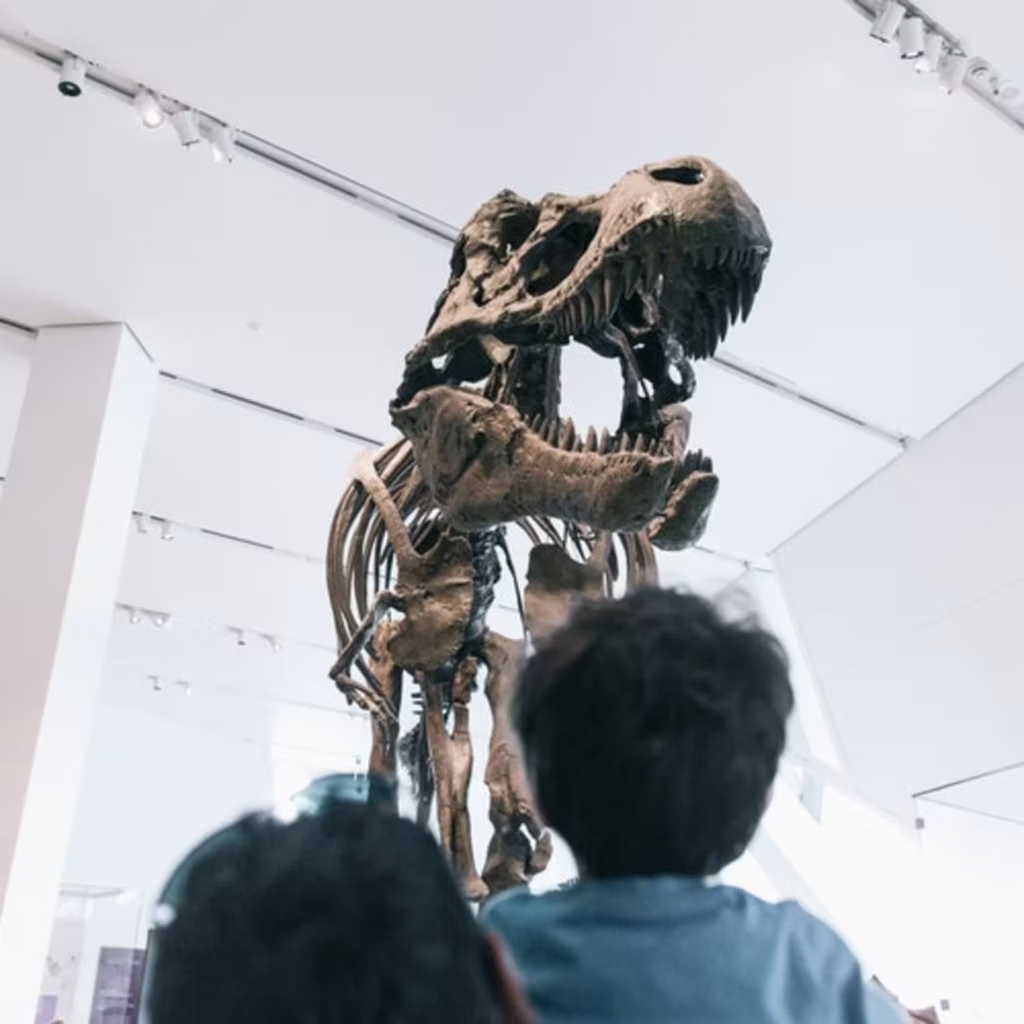
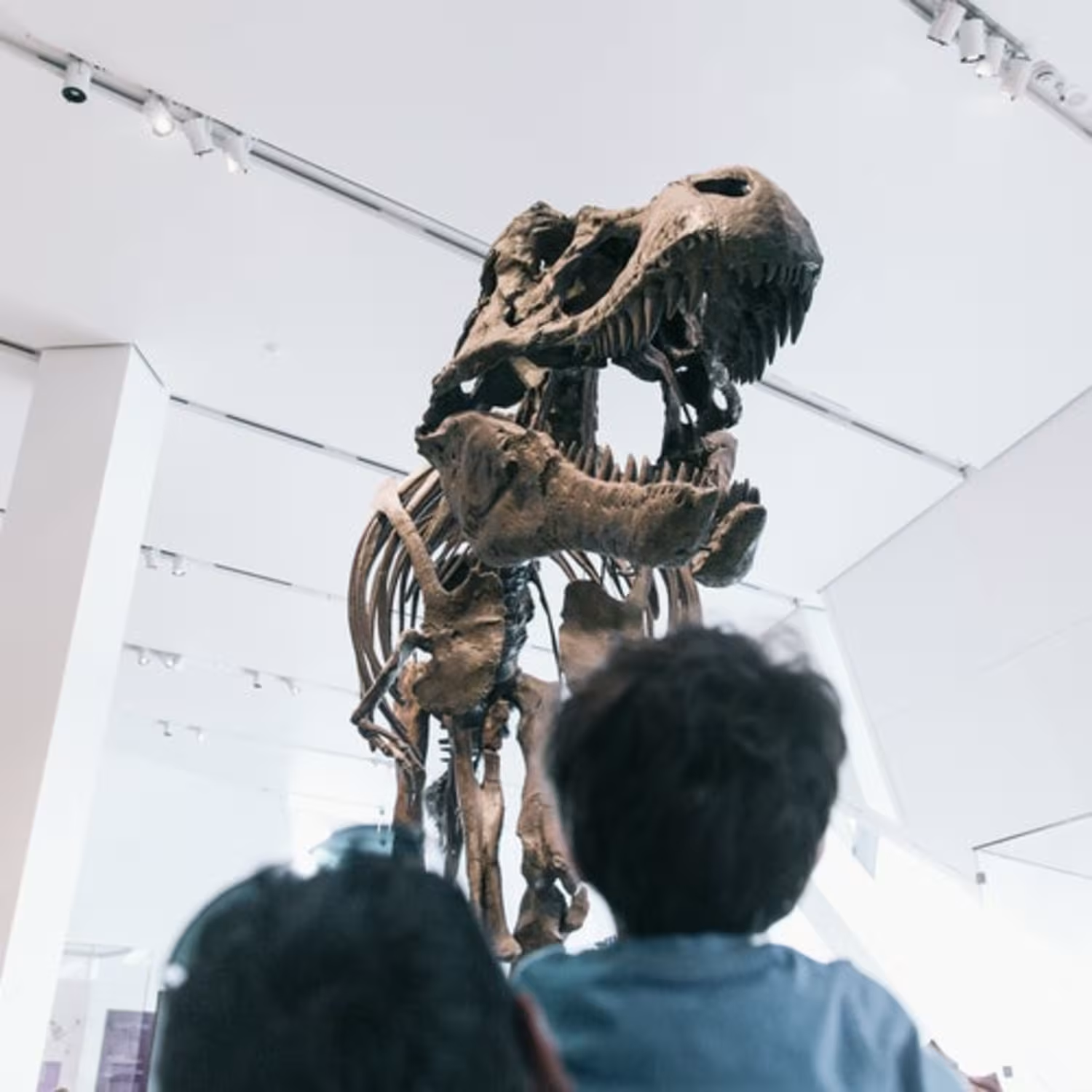
Expect Tyrannosaurus rex, Stegosaurus and Triceratops, along with hundreds of other specimens such as fossil plants, insects and marine animals. One of the most dramatic mounts shows Zuul crurivastator, an armoured ankylosaur, in a fight with Gorgosaurus libratus. Most of the dinosaurs come from the fossil fields of Alberta, and the ROM's collection of dinosaur skulls is one of the most comprehensive in the world, with real horned dinosaur skulls including Triceratops.

Gordo, Parasaurolophus and the duck-billed dinosaurs

Inside the Royal Ontario Museum, Toronto

The centrepiece is Gordo, a Barosaurus 27 metres (about 90 feet) long. It is the largest real fossil dinosaur skeleton mounted in Canada and one of only three complete Barosaurus skeletons on display in the world. Gordo was collected in the early 20th century from the Morrison Formation, in what is now Dinosaur National Monument in Utah, and the ROM acquired it in a trade in 1962. For decades the bones sat in storage, catalogued as separate pieces, until palaeontologist Dr. David Evans realised in 2007 that they belonged to one animal. The nickname honours Dr. Gordon Edmund, a former ROM curator who had planned to mount the skeleton.

Look out too for Parasaurolophus walkeri, which the museum calls its most famous fossil, a growth series of Corythosaurus skulls showing how the helmet-shaped crest changed as the animal grew, and six complete original skeletons of duck-billed dinosaurs. Smaller finds such as Wendiceratops, a horned dinosaur, are easy to miss next to the giants, so take a second lap once you have seen the big mounts.

Before the dinosaurs: the Dawn of Life gallery

Gallery at the Royal Ontario Museum

Also on Level 2, the Willner Madge Gallery, Dawn of Life tells the story of the four billion years before the dinosaurs, from the Precambrian to the Triassic. It covers almost 10,000 square feet and shows nearly 1,000 fossils, more than 60% of them from Canada. Four UNESCO World Heritage fossil sites are represented: Mistaken Point, the Burgess Shale, Miguasha National Park and the Joggins Fossil Cliffs.

The oldest object here is a rock from northern Québec, estimated at 3.7 to 4.2 billion years old, which holds the oldest known evidence of life on Earth. Burgess Shale animals such as Hallucigenia sparsa and Kootenayscolex barbarensis, a marine worm discovered by ROM researchers, show how strange early animal life looked, and a full-sized bronze cast of Dunkleosteus, an armoured prehistoric fish, gives a sense of scale. If you have children with you, walking Dawn of Life first and then the dinosaurs follows the timeline in the right order.

The Bat Cave, the Age of Mammals and hands-on biodiversity

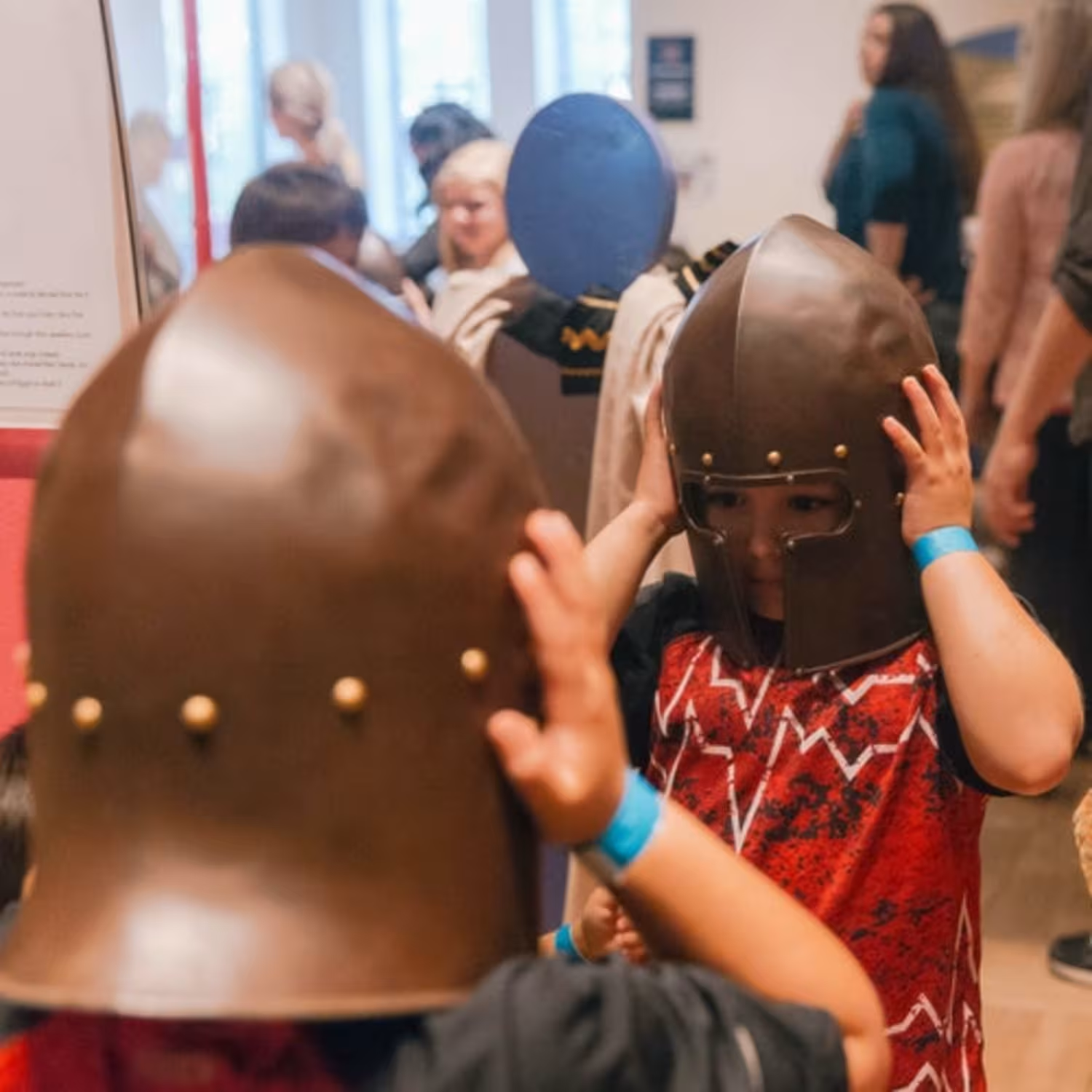
Visitors in the Royal Ontario Museum galleries

On the same floor, the Bat Cave is a walk-through recreation of the St. Clair Cave in central Jamaica, a cave carved by an underground river about 30 metres below ground and around 3 km long. It is built from ROM fieldwork in the real cave and holds more than 20 bat specimens and over 800 models, with cave formations, an explanation of echolocation and a dramatised version of the bats' nightly flight out to feed. It is dark and enclosed, which is half the fun for most children.

The Reed Gallery of the Age of Mammals, also on Level 2, picks up where the dinosaurs stop, about 65 million years ago, with more than 400 specimens and 30 fossil skeletons of extinct mammals: a mastodon, a sabre-toothed cat, a giant ground sloth, a giant beaver and Torontoceros, an extinct deer named after the city. The Patrick and Barbara Keenan Family Gallery of Hands-on Biodiversity on Level 2 lets younger visitors crawl through a fox's den, handle a shark jaw and snake skin and watch a live fish aquarium, with trained facilitators on hand.

Earth's Treasures: minerals, gems and meteorites
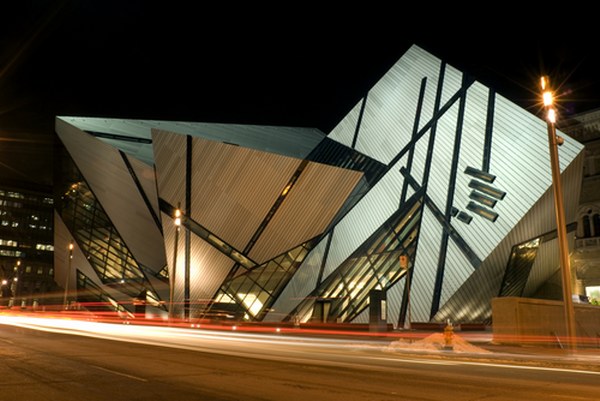
Royal Ontario Museum lit up at night

The Teck Suite of Galleries: Earth's Treasures on Level 2 brings together close to 3,000 specimens of minerals, gems, meteorites and rocks from all over the Earth, the Moon and beyond, covering more than 4.5 billion years. It is split into the Vale Gallery of Minerals, the Canadian Mining Hall of Fame Gallery and the Gallery of Gems and Gold.

The gold section is the most interactive part: there is a touch-screen wall, an interactive table game, a giant pure gold coin and a wall of gold ore you are allowed to touch. It is a calm stop between the busier natural history galleries, and a good place to point out to anyone in your group who is more interested in sparkle than in skeletons.

World cultures: Egypt, China and the crest poles

Royal Ontario Museum building on Queen's Park, Toronto

Once you have done Level 2, the main world culture galleries are on Level 1 and Level 3. On Level 3, the Galleries of Africa: Egypt draw on the most important Egyptian collection in Canada, about 25,000 artifacts with close to 2,000 on display, covering nearly 5,000 years from prehistoric Egypt to the Ptolemaic period. The same floor has galleries of Nubia, Greece, Rome, Byzantium, Ancient Cyprus, the Bronze Age Aegean, the Middle East and South Asia.

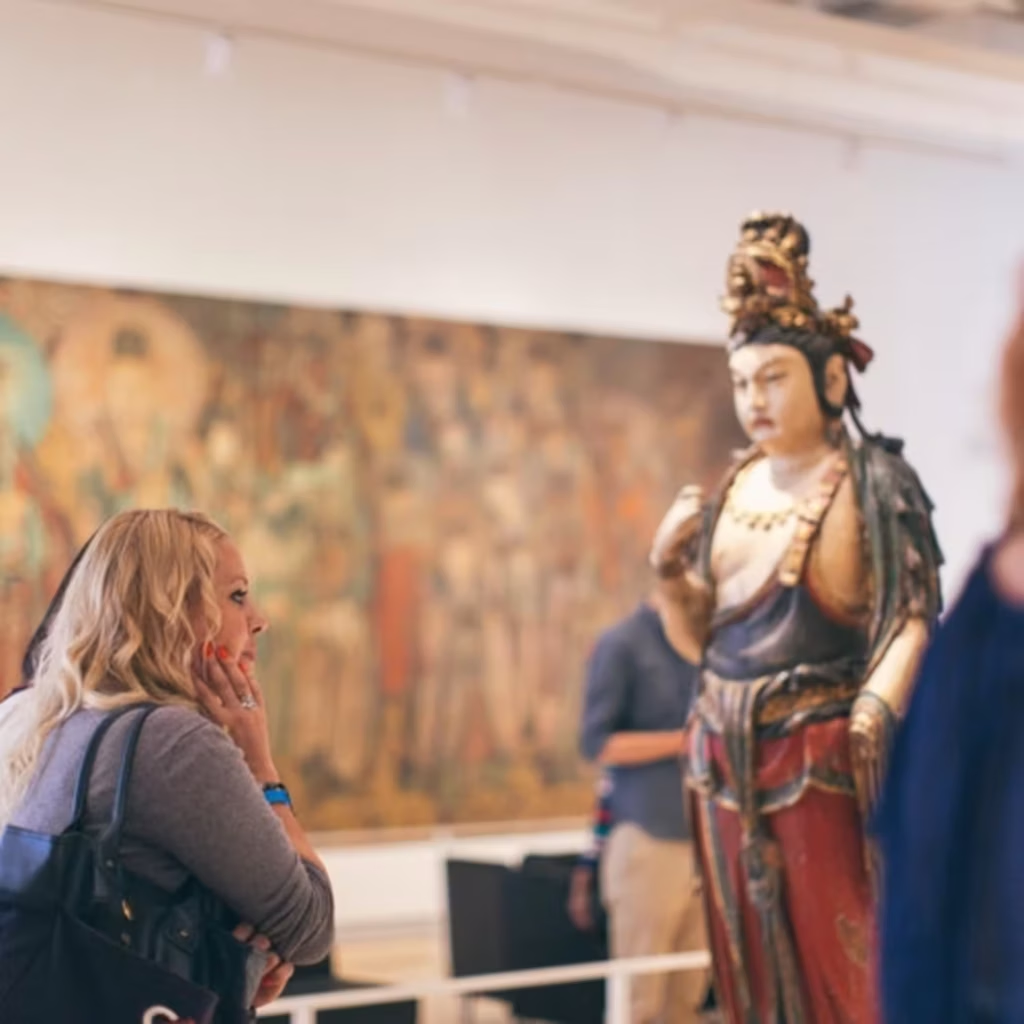
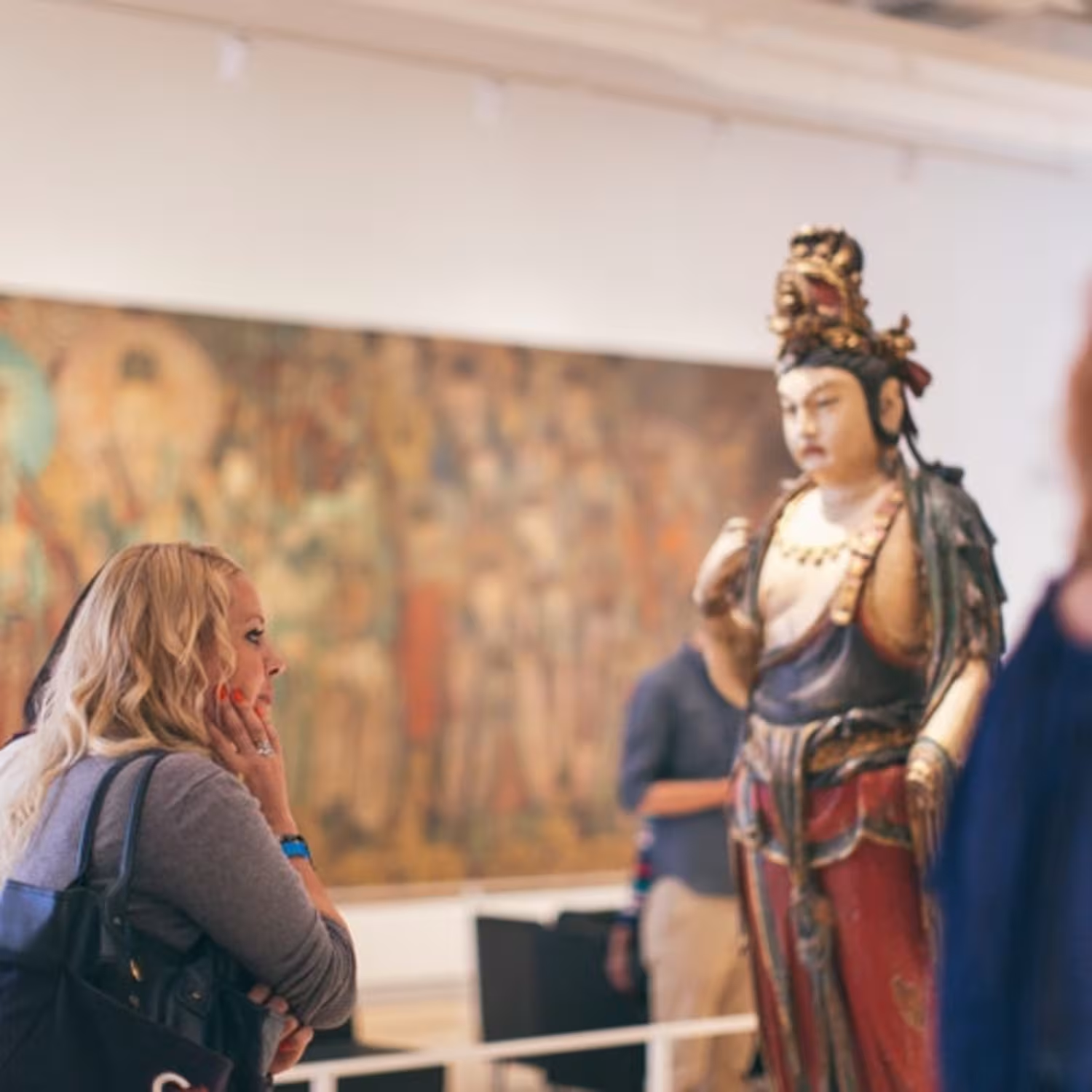
On Level 1, the Matthews Family Court of Chinese Sculpture and the Bishop White Gallery of Chinese Temple Art are part of a run of China galleries that also includes the Gallery of Chinese Architecture; the ROM holds the largest collection of Chinese architectural artifacts outside of China. The Daphne Cockwell Gallery is dedicated to First Peoples art and culture, and just outside it stand four Nisga'a and Haida crest poles from the Pacific Northwest Coast, which the museum lists among its must-see treasures. The poles commemorate family origins, rights and achievements.

A route through the ROM in half a day

Enter through the Weston Entrance on Queen's Park and check your coat or backpack past the rotunda staircase.

Go straight up to Level 2: Dawn of Life first, then the Age of Dinosaurs, so you follow the timeline.

Continue to the Age of Mammals and the Bat Cave, then the Hands-on Biodiversity gallery if you have children with you.

Finish Level 2 in Earth's Treasures before heading up to Level 3 for Egypt and the ancient world.

Come back down to Level 1 for the China galleries, then find the crest poles by the First Peoples gallery on your way out.

Every level is reached by elevator, and a Mobility-Friendly Guide maps an elevator and ramp route through all the permanent galleries.

Quick tips before you go

The museum is closed on Mondays, so plan Toronto days around it.

Your ticket is valid for the whole day; you do not need to rush the dinosaurs.

Special exhibitions are not part of general admission; check what's included when you book.

Weekday mornings are calmer than midday at weekends and on holidays.

There is a lunchroom with tables and vending machines on Level B1, and Druxy's ROM Café serves food and drinks.

Bags are checked at the entrances, so travel light.

Combine the ROM with more of Toronto

The ROM sits in the museum district around Queen's Park and Bloor Street, a short walk from the Bata Shoe Museum. Compare it with the other museums in Toronto, such as the Art Gallery of Ontario, or add the Hockey Hall of Fame downtown. When you are ready, choose your entry on the Royal Ontario Museum ticket page.

What to See at the ROM: FAQs

Where are the dinosaurs at the Royal Ontario Museum?

The James and Louise Temerty Galleries of the Age of Dinosaurs are on Level 2 of the Michael Lee-Chin Crystal. The Dawn of Life gallery, the Age of Mammals and the Bat Cave are on the same floor.

Which dinosaurs can you see at the ROM?

Highlights include Tyrannosaurus rex, Stegosaurus, Triceratops, the ankylosaur Zuul crurivastator facing a Gorgosaurus, Parasaurolophus walkeri, a growth series of Corythosaurus skulls and Gordo the Barosaurus.

How big is Gordo the Barosaurus?

Gordo is 27 metres long, about 90 feet. It is the largest real fossil dinosaur skeleton mounted in Canada and one of three complete Barosaurus skeletons on display in the world.

Are the dinosaurs included in a general admission ticket?

Yes. The dinosaur galleries are part of the permanent galleries covered by general admission. Special exhibitions are sold as a separate ticket, so check what's included when you book.

What is the Dawn of Life gallery?

It is a Level 2 gallery of almost 10,000 square feet with nearly 1,000 fossils covering about four billion years before the dinosaurs, including Burgess Shale animals and a rock holding the oldest known evidence of life.

What is the Bat Cave at the ROM?

A walk-through recreation of the St. Clair Cave in central Jamaica, with more than 20 bat specimens and over 800 models, cave formations and a section on echolocation.

How long do you need at the Royal Ontario Museum?

Half a day covers Level 2 natural history, the Egypt gallery on Level 3 and the China galleries on Level 1 at a steady pace. Your ticket is valid for the whole day if you want to stay longer.

What is there for kids at the ROM?

The dinosaurs, the Bat Cave and the Patrick and Barbara Keenan Family Gallery of Hands-on Biodiversity, where children can crawl through a fox's den and handle touchable specimens such as a shark jaw.

What can you see in the ROM's Egypt gallery?

The Galleries of Africa: Egypt on Level 3 hold the most important Egyptian collection in Canada, with close to 2,000 objects on display spanning 4,000 BC to AD 400.

Is there a free day at the Royal Ontario Museum?

On the third Tuesday of each month the museum stays open into the evening with free timed entry on a limited number of tickets that must be booked in advance. Our ticket gives you a reserved time slot on any other day.

Which entrance do I use to reach the dinosaurs?

While the Bloor Street entrance to the Crystal is closed for OpenROM construction, all visitors enter through the Weston Entrance on Queen's Park and take the stairs or elevators up to Level 2.

About this guide

Sources: Royal Ontario Museum, James and Louise Temerty Galleries of the Age of Dinosaurs; Royal Ontario Museum, Gordo the Barosaurus news release; Royal Ontario Museum, Willner Madge Gallery, Dawn of Life; Royal Ontario Museum, Bat Cave; Royal Ontario Museum, Reed Gallery of the Age of Mammals; Royal Ontario Museum, Patrick and Barbara Keenan Family Gallery of Hands-on Biodiversity; Royal Ontario Museum, Teck Suite of Galleries: Earth's Treasures; Royal Ontario Museum, Galleries of Africa: Egypt; Royal Ontario Museum, Bishop White Gallery of Chinese Temple Art; Royal Ontario Museum, Iconic: Totem Poles.